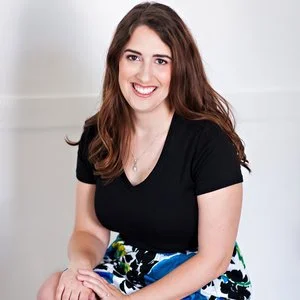
How to Convert More Clients on Discovery Calls
Discovery calls don’t have to feel salesy, awkward, or pushy — and for holistic practitioners, they shouldn’t. In this episode of Elevate Your Practice, Samantha is joined by Joanna Sapir, a business strategist who helps holistic practitioners build sustainable, profitable practices through clear systems and intentional client journeys. Together, they reframe discovery calls as connection tools — a way to filter for right-fit clients, create clarity, and enroll people into care they’re actually committed to.
This conversation dives deep into why session-by-session booking often leads to burnout, inconsistent results, and unstable income — and how a thoughtful consultation process helps both practitioners and clients feel more supported, aligned, and confident moving forward. You’ll also learn how discovery calls can become one of your most powerful marketing tools by giving you language straight from your clients’ mouths.
If you’ve ever felt uncomfortable with “selling,” frustrated by clients who don’t follow through, or overwhelmed by having too many inquiries that aren’t a good fit, this episode offers a grounded, values-aligned alternative.
Key Takeaways
Discovery calls work best when they’re treated as connection and alignment tools, not sales pitches.
Letting anyone book a session without filtering often leads to burnout and misaligned clients.
A clear consultation process helps practitioners enroll clients into treatment plans, not one-off sessions.
Short phone consultations act as an effective filter before deeper assessments.
When you clearly state the problem and solution, there’s no need to “pitch” your services.
The language clients use in consultations can become your most powerful marketing copy.
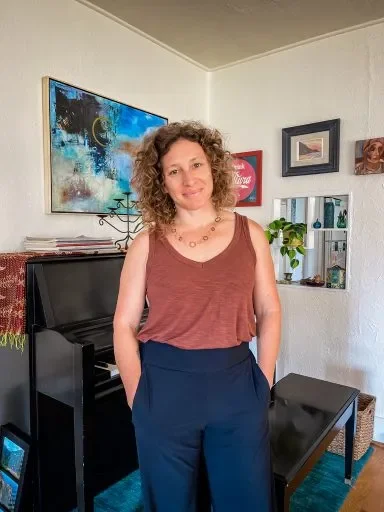
Joanna Sapir
Joanna Sapir is a business strategist for holistic practitioners, particularly those that integrate multiple modalities.
Joanna's special ability is in helping practitioners set up repeatable systems and processes in their businesses to serve their clients more powerfully, enroll committed long-term clients, and create steady income and cash flow.
She has been a teacher and trainer for more than twenty years, from the classroom to the gym floor and now to wellness practices across the world.
Born and raised in the San Francisco Bay Area, she is a mother of two, a USA Masters National Champion in Olympic-style Weightlifting, and the host of the Business Revolution for Practitioners podcast.
Transcript
[00:00:00] Samantha: I am Samantha Mabe, website designer and founder of Lemon and the Sea, and this is Elevate Your Practice. If you're a holistic health practitioner ready to grow your practice without wasting time on things that don't work, you're in the right place. Each week I share a website, SEO, and marketing advice along with guest experts so you can bring in the right clients and feel confident about how you are showing up and serving the people that you help. Let's get started.
[00:00:38] I am so excited for you to listen to this episode of Elevate Your Practice, where we're talking all about discovery calls as connection tools, and how you can use discovery calls to find more right fit clients and improve your marketing.
[00:00:58] My guest today is Joanna Sapir, a business strategist for holistic practitioners, particularly those that integrate multiple modalities.
[00:01:07] Her special ability is in helping practitioners set up repeatable systems and processes in their businesses to serve their clients more powerfully, enroll committed long-term clients ,and create steady income and cash flow.
[00:01:21] She has been a teacher and trainer for more than 20 years from the classroom to the gym floor, and now to wellness practices across the world.
[00:01:28] Born and raised in the San Francisco Bay Area, she's a mother of two, a USA Masters National Champion in Olympic style weightlifting, and the host of the Business Revolution for Practitioners podcast.
[00:01:40] Thanks so much for joining me, Joanna. Can you tell us a little bit about your business journey and how you got to what you're doing today?
Joanna’s Journey from Practitioner to Business Strategist
[00:01:47] Joanna Sapir: Yeah, sure. Well like really almost all wellness practitioners, 99% of them, I started a wellness based business. It was a strength and conditioning gym with zero experience in business whatsoever. I was just totally, you know, winging it, flying by the seat of my pants.
[00:02:08] I had been a high school history teacher for 10 years and really very organically decided to start this business. I personally was not somebody who was like, I wanna be an entrepreneur and I don't want a boss. I actually totally thought I was gonna be staying in education, but just randomly I moved to a new area and it didn't have the kind of strength and conditioning training that I had been doing that had really, really changed my life. And so I was like, people need this and I need a place to do this. And I just sort of created it.
[00:02:41] And so what I discovered was right away like, 'oh my goodness, I don't know how to run a business.' And people were coming and showing up. I know a lot of people when they start their business are just struggling to get clients. I can't say that I was filled with clients, but people were showing up, which meant I had to show up every day. And I was a single mom at the time, two young kids. And I had to show up like in the mornings and in the evenings exactly when I wanted to be home with my kids to run this business. And it was just me. And I very quickly realized like, 'oh my God, I don't know how to do this. I know how to show up for the clients on the gym floor. I know how to teach them how to move better. I know all that. I don't know what I'm doing otherwise.'
[00:03:24] And I looked around and went, 'other people have figured this out. This is figureoutable, right?' People have businesses that are sustainable and this one wasn't at that point. So I kind of set out on a mission to learn the business side of things. In my case anyway, I fell in love with it. That's what I hope to pass on to other people. I really fell in love with setting up systems in my business to make it run sustainably and, and profitably. And so I built that gym to be profitable and sustainable and eventually to run without me, which was amazing.
[00:03:59] Other practitioners started asking me for business help. I was the client of so many of them. Really amazing people, therapists, body workers, I mean, just amazing practitioners. Their business success, or lack of success, was not a reflection of the quality of their care. They were really good at what they did, but their businesses might be totally flailing, might have these up and down months, or they were the ones who were completely slammed and were totally overworking. Their businesses were their lives. So I just really saw the need there, and I knew at that point I was like, 'I have all the tools. I know how to do this. I had been a teacher for 10 years and I was like, this really feels aligned. I'm gonna start teaching these folks.'
[00:04:42] And after, I don't know, maybe a year of helping people on the side, I decided I'm gonna sell my gym and just go all in on this. And so I did, and I have to say, to be able to sell a business means it's gotta be worth something. Which means, it's profitable and has systems to run it so that somebody else can come in and isn't buying themselves a job, they're buying themselves a business. So I sold it and I've been doing this ever since, and that was almost nine years ago.
[00:05:05] So that's how I came to do the work that I do streamline and organize their businesses to be more profitable and more sustainable, and really to make more money with less time and energy.
[00:05:17] Samantha: Yeah, I came to working with wellness providers in a similar way in that I had worked with so many of them and I had seen the value of their work, but I was also like 'your marketing is just not there. Your website looks like it was built 15 years ago.' And even my mom is like, yeah, my chiropractor's website is terrible. And I'm like, 'okay, if those people are noticing, then we need to do something a little bit different.' I think of it as my job is to help those people get in front of clients that they can really help. So I'm helping spread all of this without actually seeing patients.
[00:05:54] Joanna Sapir: Exactly.
[00:05:55] Samantha: I absolutely love it 'cause I know the value of that work.
[00:05:59] Joanna Sapir: Just echoing what you said, it's a real ripple effect going on. Helping people who really can help others transform their lives, have a larger impact, help more people transform their lives.
Sales Systems Create Clients
[00:06:11] Samantha: Today we're kind of focusing on discovery calls, and you teach this in a way I really liked because a lot of times we follow online business owners who a discovery call is a sales call, and they're just like pushy and they want you in because they wanna make money. And that doesn't feel aligned for the types of people we work with. You teach it as they're not sales calls, they're more of connection points and I'd love if you could explain what that shift looks like in practice for people who haven't really seen it that way.
[00:06:45] Joanna Sapir: Yeah. I think a number of your people in your audience are brick and mortar in person practices, right? Same for me. Probably a little over half of the businesses that work with me are, are in person brick and mortar. So that term discovery call is pretty unusual, I'd say in like a local business brick and mortar space. I tend to just call it consultation as the general catchall. But I will just say that whoever uses this method, which is all my clients, they name that consultation based on their business and who their clients are. So there can be many different names for it. But in the case of in-person, local hands-on businesses, this is an actual in-person consultation.
[00:07:24] So let me just back up a minute and say that switch you're talking about, so this is in business speak, what we call a sales process or a sales system, and that word sales just usually sends people running, like, I'm terrible at sales. You'll hear that right? But I think it's important to start by understanding this is how you get clients.
[00:07:46] One of the most important parts of your businesses is how you get clients, right? And so many people think that marketing is how you get clients. You help people with their marketing, right? And you probably see this because I have lots of marketer friends in this space who are like, 'yeah, I know how to bring people leads, what I do brings people leads.' But when they don't have a sales process or sales system that's out of my control, they need to have that. So sales is how you take somebody who has found you and noticed you and is interested in you and, and how you walk them down the path to actually becoming a client.
[00:08:25] And the way so many practitioners do it, I mean one is people think that they're systematizing and automating when they put booking pages on their website. So that's probably these days the most common thing. If you don't mind, Samantha, I'm gonna talk a lot about why I consider that an issue or why that's a problem, because it sounds very efficient, right? Of course, people can book online. So I'll come back to that. But that's one way. And then other ways are like, people have a contact form. They might have their phone number and a contact form. There's multiple calls to action.
[00:08:59] So when somebody comes to me initially, I'll ask them, 'right, how does somebody become a client?' And that practitioner might be getting texts, they might be getting emails, they might be getting phone calls, all these different ways. And I'll say, 'okay, well what happens? Somebody texts you and what happens? Somebody calls you and what happens?' And it's this messy process, in general, of like, 'well, I talk to them a little bit and then I give them the information they need to book a session.' And again, the other step that people feel like, 'okay, I've got it down now, is there's just a booking link and I can book the session.' I know that's super standard in wellness practices.
Why “Anyone Can Book” Is a Problem
[00:09:38] My stance is that as a wellness practitioner, ideally, you wanna work with the people that you love working with, that you're really able to help, and that therefore see the best results from your services. That's not everyone. And this is the hard pill to swallow for so many practitioners because we come out of our schooling, whatever it is, acupuncture, massage, therapy, whatever it is and we've been taught how to treat everyone. We've been taught how to help everyone, right? And then you listen to some business stuff and they tell you you need a target market and a niche and you go, I don't know what that is. I wanna help everyone.
[00:10:19] I don't wanna just repeat that. I actually don't think it's about niching and target market, like whatever those are, those, those are terms out there. But the way I think about it is, you wanna have the greatest impact. There are people you have worked with, anybody who's a practitioner who has worked for any number of years has had clients that were challenging clients, maybe personality wise, maybe their health condition. They've had people who dropped off and just like should have kept coming but didn't, so they didn't see results.
[00:10:47] There's a reason behind all of that, and you wanna identify that. You wanna identify what makes the people who have been not great clients, not great clients? And what makes the people who have been my favorite clients, my favorite clients? And the favorites are always, as I said, the people that you've really enjoyed and that see the best results. They've been the most committed, and therefore they see these results. And they also had specific problems that you were able to address.
[00:11:17] When you have a sales process that just opens your doors to anyone, you are gonna be spending time with people who you may not enjoy, but more important than that who you may not really be able to help. And so first and foremost, you wanna be able to filter people so that when somebody, for example, has a specific health problem that you know is out of your wheelhouse. Yeah, you could do a bunch of research and try and yes, you were taught to do that, I get that, but wouldn't it be so much better for them and for you and for someone else if you kindly referred them to a practitioner, you know that is exactly the person that can help them.
[00:11:59] And so we want some kind of filters in place instead of people just being able to book a session. Somebody is able to just book a session and get in online with no filter, you have no idea how committed that person is to their health, right? Is there really a point to having somebody come in once and then you just kind of hope they come back or you hope there's somebody that you can help? It's trading your one time 150 bucks or whatever your session costs. It's trading pennies for dollars. You're choosing, well, I just get the 150 bucks for the session when really you could be designing your business to just be attracting and enrolling the people who are committed to their health, that you can definitely help, that are gonna see the best results from your services, and that you love working with.
[00:12:47] We're talking about like prioritizing that so the sales system that I teach involves these filters and a consultation is one of them. There's actually even a filter before the consultation. The way I teach a consultation is it's an hour long process, but you have a filter in place ahead of that in order to determine is this person, are they on target? Do they seem like somebody I can help? Are they qualified on price and commitment? They're not making a decision yet. You're just qualifying them. But then in the consultation, you're really connecting with someone.
[00:13:23] Something you didn't mention that is a real key in what I believe and have helped so many practitioners do is that in this consultation, you're not signing somebody up for a session, you're enrolling them in a whole program or treatment plan that's actually gonna get them the results they want.
[00:13:39] You're spending an hour with somebody to really assess their needs, lay out their needs, and what their program or treatment plan would look like, and inviting them to commit to that. And when done well it's such a beautiful process of connection because this is not about, quote unquote making the sale. This is about you two finding alignment, them coming into alignment with you and how you work. You really clarifying, yes, this is somebody I can help, that my services are are right for, and being in agreement with each other of, okay, we're going on this journey together, which is so different from the standard session by session approach and it's even hard to put into words unless you've experienced it.
[00:14:24] It's a whole different ball game when you're not seeing people session by session and hoping they rebook and show up the way you know they need to when instead they've said, yes, I'm here. You know, whatever this treatment planner program it is, maybe it's four months long of weekly appointments, something like that, and it's like somebody saying, yes, I'm doing this. Then you're booking somebody out for four weeks and you're getting to help them at such a deeper level.
[00:14:50] Samantha: I really like that approach. Thinking about having a program that you put somebody in and I have done lots of things where it's week by week appointments and I am committed because I know, but at the same time, it would be nice to have like, okay, we're gonna plan on this being four months, six months, and then at the end you're gonna get a result. Instead of me going, well, I may be in this indefinitely and I have no idea at the end what the outcome is going to be.
[00:15:16] And it might feel less expensive because I'm paying weekly than seeing like a bigger price tag, but it's probably not because it's all gonna add up because I have to come back weekly and then I might decide, oh, well, you know, it doesn't seem like it's working. Take a break and then I'm gonna come back. And I think, if I was able to sit down with somebody for an hour consultation to have them really understand, it would be nice then to say, okay, this is what we're expecting, this is what we're building, and it makes a lot of sense. Thinking about it as a parent and as somebody who has worked with these types of things, like I would like that approach from somebody.
[00:15:54] Joanna Sapir: It's really important for everybody listening, for practitioners, to hear that from the client perspective. I am exactly like you. I wanna know what are we in for here? How long do we think this is gonna take to get, you know, a first result or a second result? And where am I in this journey now? When I'm two months in, does it look like I'm at the halfway point like we thought, or is it going slower than we thought? Or is it going faster than we thought? How do you see my progress? It's so important that practitioners hear this from a client perspective, because I guarantee some of you listening to this might be freaking out at that idea.
[00:16:28] The thing is, practitioners often will hear this and they'll think that this idea is just this business thing, that it's just this way to quote, unquote lock people into a contract or services. That's not what you or I are talking about here. We're actually talking about how we want to be served as clients. We wanna know what's this process, where are we in it?
[00:16:49] And that's a mistake that many practitioners make. When they're working with a client who does come back on their own week after week, those are our best clients, right? The ones who just really do. We think, well, they come back so they're liking it, but we're still in this session by session mode. And we might have in our head, Ooh, this is happening with them and this is where I wanna go next. But they don't share it with us as the clients. They don't share that with us. Or they might say something, but they've never mapped out the whole journey with us and for us, and then touch base with us. I just wanna say to you all listening, you might think that's happening, but it just generally doesn't.
[00:17:26] And that is what we're talking about here, is really serving people at this deep, powerful level by designing the journey that's gonna help the client get there and being completely explicit about that journey. What are we doing? Why? Where are we at in the process, et cetera?
Filtering for Right-Fit Clients (Without Over-Niching)
[00:17:44] Samantha: Yeah, I would love to have a discussion and let me know what makes sense, as far as like how do we filter who books these consultations, but also why you don't recommend necessarily having just a general book a consultation link on an appointment or what you recommend that looks like? Because that's what a lot of people do, that's what I do for a lot of my clients. So I'd love to see how you approach that make sure that the right people are the people that are getting on your calendar.
[00:18:14] Joanna Sapir: Yeah, so I have two different systems, one for brick and mortar, local, one for online. Let's just talk about brick and mortar. So the call to action on the website, and I hope that you'll agree with me here as a website designer, but we want the call to action to be super clear so that anybody landing there is like, oh, this is the step that she's inviting me to take. And so the first step in my brick and mortar sales system is to book a 15 minute phone consultation. That's not that hour long consultation that we were talking about, that's the filter for the hour long piece.
[00:18:47] And when you were saying how many people have a book a consultation link on their website, what I see, and probably what you're talking about is, they have a booking page that has a variety of appointments available and book a consultation is just one of them. But also the person landing there, the prospective client can book any number of sessions. And so that defeats the purpose of a clear invitation. What's the one thing we wanna do?
[00:19:12] So I'll have people who learn that this is part of the system I teach and they'll come and they say, 'I have a book a consultation link. But most people just book a session anyway 'cause they're coming by referral or whatever.'
[00:19:24] The thing about this sales process is, what I say about it is, you want everyone to go through this sales process. Even if your mother wants to work with you, your cousin wants to work with you, your brother wants to work with you, they go through the same sales process because it's not about making the sale. It's not actually about the money and whether they're gonna say yes, it is about bringing them to into alignment and educating them and getting their full buy-in on what they need and the commitment to it.
The Role of Consultations in a Sustainable Practice
[00:19:58] We want everyone to be booking a consultation. It does not matter if they're a referral who says, 'Samantha referred you and says, you're great. I wanna book a session.' You say, 'great. Let's book a 15 minute phone consultation to make sure that I can help you. And if I can, then I'll invite you in for an assessment.' That's again, one of the things that happens in the hour long. You are filtering them maybe even more than they're filtering you. You are determining, is this one of my people? Is this somebody I can help and wanna work with and that I think will see the best results for my services? So that 15 minute phone consultation, we want that to be the only option there. that's number one. So that is open to everyone. That is automated so they end up in your system. They schedule that.
[00:20:44] Just to get into details here, for brick and mortar folks, this is replacing people calling the office. And so we want those 15 minute phone call appointments to be available every day that your office is open. So you should have a few slots open every day. Maybe there's an hour of time, like 30 minutes here and 30 minutes there. That's space for four calls. But we want somebody who is looking right now, the local folks are the ones who are like, I'm in pain I need an acupuncturist right now. We want them to be able to book right away. And so you just leave that available only the next three days and all those slots. So they book that. And the phone consultation is essentially a pre-qualifying phone call where you have a straight up script. And my instructions around it are read the script every time, because otherwise people just go off the rails and they end up in these long conversations with people.
[00:21:37] The important thing here is there's no sale being made here. All you're doing is determining is this person in my wheelhouse? If they are, then you ask them qualifying questions. So you start by asking 'em 'what's going on with you, why you're reaching out? Tell me a little bit more about that.' Whatever questions that you need, three to five maximum, to determine this sounds like somebody that I can help.
[00:22:01] And if it's not or it's even borderline, you right away say, 'I don't think I'm the best practitioner to work with you, but I know somebody who I think would be great', or 'I don't work with folks with, you know, pelvic floor dysfunction, but I have two practitioners who I really recommend exactly for that.' And so you refer them, boom, that's in five minutes.
[00:22:20] If they do seem to be one of your people, you say, 'great, sounds like maybe I can help you. So let me tell you about how my services work. The first thing I do is invite you in for a free assessment and consultation.' Again, there's all different kinds of names for it, but it does involve an actual assessment on your part, because you are determining what is their treatment plan to lay out for them. So you're just explaining to them, ' this is what I do, this is how it works. Are you willing to do that?' You're asking consent based questions the whole time. And then you get to, 'if you came in and we had a fit and you were to decide to work with me, this is how much it costs. Is that in your budget?' Just straight yes or no question, asking directly. That's a qualifying question for price. And you do the same thing for any other qualifiers you need. If, for example, time commitment has been an issue in the past, let's say you really need people to do their homework, their exercises five to 10 minutes a day, that's something you can qualify them on. ' If we were to work together, I would be asking you to do 10 minutes of special exercises that I give you every day. Are you able to commit 10 minutes?' It sounds easy, but it can be hard for people to fit that in.
[00:23:25] And of course, pretty much everyone's gonna say yes, but by them saying yes, they have just committed, right? This is what I mean about bringing people into alignment. And so it's such an important part of the process.
[00:23:37] So anyway, if they qualify, that's when you invite them in for the in-person assessment. And I'll just note, I had an interview yesterday on another podcast with an acupuncturist, and she was like, 'I just know that when I hear this, my hairs stand on end and I know that so many people will that like, why does this have to be for free? I don't wanna spend more time now doing this for free.' And here's the thing, that's back to that trading pennies for dollars. You're trading the $150 session for like a 3000, 4,000, $5,000 program.
[00:24:08] And so in this system, brick and mortar practitioners, anyway, our minimum conversion rate. On average conversion being how many people in the come to the consultation and then sign up for the whole program, the minimum is 80%. Most people are at a hundred percent 'cause you've qualified them, you've made this connection with them and then the consulta, the in-person piece is so deep. They already came in knowing like this is what I'm deciding on. They're in. And so yes, it's an hour of time that you now have a client for four months, five months, six months, whatever your program or treatment plan looks like. You have now, instead of charging $150 for a session, made 3000, 4,000, $5,000, whatever that is.
[00:24:54] And I've had people say, 'can I just charge for the assessment?' And I have had clients who after they stopped working with me, I happen to have seen on their website that they've charged for that. I haven't reached out, but I think that the conversion rate would go down. It's sort of like the principle of reciprocity. You've helped me see so much. That's the thing about the consultation as I teach it, is it's super valuable. Even if I'm not ready to move forward, for some reason, I'm walking away with some real clarity about what's going on with me and what your solution is and how that can help me.
[00:25:27] And that's what so many people who are struggling with with all different kinds of health problems, don't have, right? So many people have tried a bunch of different things. Right now I got some funky thing going on with my hip. To be able to go to somebody and for them to do an assessment and be like, here's what's going on. Here's what I can see is going on, and here's what I think that the treatment would involve, that would help you. That's such a peace of mind right there. So they're getting that no matter what.
[00:25:53] But anyway, close rate, like I said, minimum 80% and very often, a hundred percent. So that's the sales process.
[00:26:01] Samantha: I really like that. So I always tell people your call to action on your website should be a consultation or phone, whatever that 15 minutes is going to be. But a lot of times the link that they will try to send people to does have, okay, well here's a consultation, but you can also choose a 60 minute session or a 90 minute session.
[00:26:21] Joanna Sapir: That doesn't work. It just doesn't work.
[00:26:23] Samantha: It's too many decisions. They don't know what to choose. And I think that's just the way the systems are set up, it's harder to get to like that single link.
[00:26:32] Joanna Sapir: There is a way. All the scheduling systems should have the option to create a separate booking page. That's what they usually call it. So you should have a separate booking page and your schedule session links should only be for existing clients. And if you're following my system, people aren't booking and paying for a session because they've paid for their whole program. And so there's not even a price attached to that. That's just a backend hidden thing that shouldn't be for the public. Whatever scheduling system you have should have the option to make a separate booking page. I guess a lot of people don't realize that.
From Sessions to Programs: Designing the Client Journey
[00:27:06] I'll just also note when you're talking about they get to a page and there's all these appointment types, one of the worst things is when practitioners might offer different modalities and they're having different appointments for the different modalities. To me, it's just totally counter to everything I'm talking about because what I'm talking about is people are coming to you as the expert you are to tell them what they need. And when you're giving me as the client the choice, I don't know what I need. I don't know if it's this kind of appointment or this kind of service. Now I have to go read about it and go like, 'I don't know which one's right for me' and now you've lost me. So in the programmatic approach, you are not separating your modalities, you're putting it all together to give the client what they need to get the results. I just think it should never be a choice. If you're somebody who's helping people with actual health issues, your job is to give them what they need and not ask them what they need. They don't know. They don't know.
[00:28:07] Samantha: I totally agree. And I tell people that you wanna give them information about what you might do with them, but they don't need to be the one going in there and going, okay, well I need acupuncture and cupping and maybe I need this.
[00:28:19] The other point that I like with the consultation and having the booking link and having availability within three days. I do have people who are like, but I want people to call 'cause I wanna qualify them, or I want them to fill out this form. Somebody who is scrolling on their phone at 11:00 PM, if they can't book, you've lost somebody because they're not gonna remember. They're not gonna come back and try to call you tomorrow morning. If you can just get them on your calendar for tomorrow or a few days out for 15 minutes, it's a lot easier.
[00:28:51] Joanna Sapir: Get them on the calendar and then you're qualifying them. And so I'll just mention that's how the online version works as well. If anybody books a discovery call, as mine is called, you see it, you book the call, you schedule it first, and then we have an application. Do you know what I mean? Let's get you in. You got it, cool. Now you fill out the form.
The Two-Step Consultation Process
[00:29:11] Samantha: You went over like what that discovery call looks like. Can you talk a little bit about what the actual consultation would look like, what's involved, and then how you make sure you're getting the information for that client and what you're gonna do with that?
[00:29:26] Joanna Sapir: Yeah, totally. So my process has like 10 steps. I won't go through them all, but generally speaking, it's about an hour. The first half hour is actually what I call interview and assess.
[00:29:39] Let me just back up and say one of the earliest steps is to be super transparent and so I just call it established expectations. So many people listening are probably familiar with buzzwords of trauma and nervous system regulation and so on. But it really, really gives people a sense of safety to clarify what are we doing here and how is this gonna go? This is the container we're in. ' We have an hour together, this is what we're gonna be doing. I'm gonna ask you several questions to understand what's going on with you. I'm gonna do a physical assessment, if that's something you do, to see for myself. And then if I can help you, I'm gonna lay out what I think is the treatment plan or the program that would help you. And then I'll ask you to decide whether you wanna do that or not. And you can ask me any questions you have in order to decide whether you wanna do that or not. How does that sound?' And now we're in agreement of what we're doing.
[00:30:30] So the first half hour is the assessment process, and much of it is an interview. If it's online, it's all an interview, right? But you're collecting whatever data you need. In person, my hands on practitioners, they start with the interview part and then they might say, 'okay, it's time to get on the table.' They might be feeling soft tissue, they might be watching somebody's gait, whatever their assessments are in order to determine what they see as the treatment plan.
[00:30:54] The way I work with people, we don't do bespoke treatment plans for every single person. What we're trying to do is really systematize our services. So we have already created a standardized program within which different people can move. Can do some customization because these are generally one-on-one services, so obviously when somebody is in a session, you're customizing it for them. But it is the same general process for everyone that you've designed and you're able to design that and systematize that because you've identified who your ideal people are, right? And so this makes it like repeatable and easy and it allows you to build systems around those services as well.
[00:31:34] So when you're doing the assessment, you're making sure is this program that I've designed, is this person a fit for that, right? Is what I am offering gonna get them the results? And when it is you lay out for them, you're essentially showing them what are they missing that you provide. You're just laying out, 'can I tell you what I see is going on? I see this is happening with your hip and what you need is da dah dah, dah. I understand that you're experiencing this or you're feeling this, or you have high anxiety around this and you've tried these things, or you're trying these things. It's elevated here. Here's what I see is going on, and here's what I recommend for you.' And so kind of laying that out. Then the program itself is very clear right there. It's like, 'oh, okay. She just named my problems, explained them to me from her perspective in this work, and told me what I need that she can help me with.' And then you just turn it over to them. So like, 'here's what that program would look like if you wanna work with me. What questions do you have?'
[00:32:30] It really is that simple. Like I said, we have 10 steps that are really like boom, boom, boom, boom. The whole way you're asking consent and making sure, like, 'do you wanna hear about this? Do you have any questions about this?'
[00:32:40] I can't tell you the number of times where people who go through my program and get to the part where they learn consultations, 'cause we learn of a lot of other stuff too, but when they get to this part, they're very excited by it because it gives them finally a format and a structure that feels really good. And then when they start doing them, they start posting in our online community, 'oh my goodness. It was so connective. It is so meaningful. It was so amazing. And what my practitioner clients most often say is, wow. They really just wanna be seen and heard.' And this process does that. It's so powerful in that way.
What a High-Impact Consultation Actually Looks Like
[00:33:23] And I'll also just note, we're talking about going deep because when you're building websites, you probably ask folks like, 'tell me about the pains and the problems of your ideal clients.' And because of clinical training, what I find is that so many practitioners think that they do such deep work with people, but when they try to describe the pains and problems of their clients, it's still at a completely clinical level. It's like, 'well, their shoulder hurts.' Or they'll describe what's wrong with the shoulder. That's not what we're really talking about. What impact is that having on this person? Why does it matter to them? What is that doing? Sure, their goals are to be pain-free, but why? What does that mean to them? What can't they do because of their shoulder? What is it doing to them mentally, emotionally? What would that change mean? And that's the kind of stuff that you get in a well done consultation. You're not just going, okay, shoulder pain. I assess the shoulder pain and I treat the shoulder pain. It's looking at the whole person.
[00:34:26] The example I like to give is I'm a competitive athlete and so for me, when I'm hurt, it messes with my whole identity. I have this whole identity as this strong woman, you know? And to be limited in that way, it's a total ego thing. I don't mean that in a bad way. I just mean like in reality, if I have formed an important piece of my identity around this, it is shaking that up. There's a lot of depth to go into about that. It's not just the physical issue. It's like, 'oh my goodness, this is preventing me from doing this thing that helps give meaning to my life and is a part of my identity.'
[00:34:59] And you wanna ask questions as a practitioner to really understand how does this person describe that? How is it to them? So it's just a lot deeper than a lot of folks go.
[00:35:09] Samantha: Yeah. And that hour gives you a lot of that time. And then you can use that in your marketing and in how you talk to people.
[00:35:18] I had a similar example where I've struggled with anxiety for so long and I had a friend who finally was like, 'oh, I finally did this thing and now I can enjoy being with my kids instead of just feeling like I want to go and hide in my bedroom.' And I was like, 'that is what I want.' Yes, I wanna feel less anxious, but I wanna enjoy my child.
[00:35:37] Joanna Sapir: Yes.
Using Client Language to Improve Your Marketing
[00:35:38] Samantha: I think those are the things that you get. And then you can use those on your website in your other marketing because that is really speaking to those people that you get it and you're connecting with them on a human level, which we need more and more of as AI and technology has changed.
[00:35:54] Joanna Sapir: Yes.
[00:35:55] Samantha: This helps them so much, but it also helps you get so much out of it as well.
[00:36:01] Joanna Sapir: I'm so glad you brought that up, because we have an actual system that we use to teach it, which is they record direct quotes during that consultation and we record them in a document, and that document is used for writing copy. And so we're using their exact words. And I just wanna point out, that's something that AI will never be able to do. It will never do that well: say the words that that client in front of you just said and how they said it.
[00:36:27] So many times, as you know when we go to write something for marketing, it's an email to our list or a social media post or something for the website, we sit there going like, 'what am I supposed to say?' And we come up with this bland shit or go to AI for stuff. And it's like, all you have to do is be asking your people and listening to them and understanding them. And all you have to do is speak their language right back. Just repeat what they're saying. So, yeah, I'm glad you said that. Makes it so much easier for marketing.
Common Mistakes Wellness Practitioners Make in Consultations
[00:36:58] Samantha: Are there any mistakes that you see people make when they're on a discovery call? And any recommendations you have to keep things focused and help the person and also ultimately, I mean, we do wanna make a sale. We want to be able to make the money at the end.
Being too attached to making a sale
[00:37:12] Joanna Sapir: Yeah, there's a ton of mistakes. One is the attitude that you're just trying to make a sale and being attached to that idea. So I'm going counter to all traditional sales training by saying this. Traditional sales training, they say 'always be closing.' That's the whole thing. I think that is a real mistake in so many ways. But just to integrity and your own authenticity and in your service. So what I talk about is practicing non-attachment, which is not detachment. You're not detached, you care, but this person in front of you, they have to have the agency to take that step towards you. You don't wanna be trying to convince them, leaning in and trying to pull them into you. This is what I mean by non-attachment. You're inviting them to come take a step towards you and to do this. They need to make that themselves.
[00:38:07] And I will just say that energetically, because I'm sure plenty of people listening are tapped into energetics, but energetically, if you find yourself trying to pull someone in to doing your program or treatment plan or working with you in whatever way, if you find yourself in any sort of convincing mode, that's how the relationship is gonna go through the whole client relationship. You didn't give them the space to have full agency to make that decision themselves. The whole time, you're gonna have to be convincing them why this is right for them, why they should do this exercise, whatever it is.
[00:38:42] Yes, we want clients, especially if you're in a position where you're financially struggling, that becomes even more important that you practice that Non-attachment. You gotta work on your own stuff. I'm gonna be okay if I don't get this client. I only want this client if this is totally aligned and they, a hundred percent with their own agency, have stepped forward and said, 'yes, I wanna do this.' You really need to have that energy set up right for yourself.
Pushing people to buy
[00:39:08] Number two is not putting them in the driver's seat and doing this kind of thing of like, 'what are you looking at?' In wellness, never ask people ' what are you looking for? What do you want? What do you need? How can I help you?' Those sound like such standard customer service type questions in a service-based business, but that is not what people are reaching out to you for.
[00:39:29] When I reach out to a wellness practitioner and they say, ' what is it you need' or 'how can I help you?' My answer is, 'I don't know.' You've already lost me. That's just wrong question. What you wanna be asking people is what's going on with you? Why are we you reaching out? What's happened? What have you tried? You're assessing, just like I said, you're assessing.
[00:39:50] So this is not about getting them to like you, this is you determining can I help this person? And if I can, laying that out for them and giving them the agency, allowing them to take full responsibility for their choice in the matter.
Thinking you have to pitch to get convert
[00:40:07] The third thing would be, still along the lines of those, is thinking you have to pitch. You don't need to pitch anything here. when you've assessed them and then you, what I call it is, state the problems and share the solution, when you do that, when you state the problems as you see them, 'here's what I see is going on and what's actually at the root cause of this. What I think is going on and what the solution would be.' That is your program. You don't need to be like, 'and now, my three month program is called this and you get this and this and this and this and this. You get this and it costs this much.' You don't have to do any kind of pitching like that.
[00:40:41] That open question period that I mentioned. Like, 'okay, so now what questions do you have for me in order to decide whether you'd like to move forward?' All of their questions will come out, you just answer their questions. So I would just say it's not a pitch, you know, and don't think that you have to pitch.
[00:40:58] Samantha: I think this probably feels like it's a shift from what people are used to seeing, especially if they've learned anything from the online gurus, but it feels so much more aligned of like, yeah, I really do just wanna help people. And so this is a way I can do that without being salesy and having to worry about just pushing people. And that works so much better for people in wellness because their heart is to solve these problems for people.
[00:41:25] Joanna Sapir: Yeah, totally.
How to Connect with Joanna
[00:41:26] Samantha: Awesome. I'd love for you to share about the masterclass and where the best place for people to connect with you is.
[00:41:32] Joanna Sapir: I'd say the best place is to go to my website and that's joannasapir.com, i'm sure you'll have a link there. There are a number of freebies available on the website, and of course the main call to action is to schedule a discovery call with me if that's something you're interested in doing. I haven't mentioned that the way I work with most people is through what's called the Profitable Practitioner Academy. And so you can read all about that on my website for anybody who's interested. I also have a podcast, the Business Revolution for Practitioners. It's very irregular, but there's a lot of content still sitting there that you can binge on.
[00:42:02] And then I think, most of all, I'd love to invite people, if you're listening and you're interested in understanding how all these pieces fit together, I have this masterclass where I teach my whole framework for how to build your wellness practice to bring in 10 to $30,000 per month with less time and effort. And it's called the Client Champion Formula Masterclass. And I will leave that link with you Samantha.
[00:42:28] Samantha: I will put that in the show notes so people can check it out. Thank you so much for coming on and sharing. This was such a good conversation and I'm really excited for people to kind of shift their mindset around discovery calls and sales.
[00:42:40] Joanna Sapir: Yeah. Great. Thank you for having me.
[00:42:43] Samantha: Thanks for listening to Elevate your Practice. If you enjoyed today's episode, follow the show and leave a review. It helps more practitioners find these tips and start growing their practices with confidence. And don't forget to check out the show notes for links and resources from today's episodes. I'll be back next week with more strategies to help you build a thriving practice.